01
Private networks
Give your team a shared view of network activity. Plan deployment around your infrastructure, access requirements and internal workflows.
Visibility for your organisationBlockchain explorers, thoughtfully built
Give your network a clear, dependable place to explore. Transactions, tokens and contracts, with a history worth keeping.
For private networks, public chains and the archives they leave behind.
From the experience
behind FSNEX.
A place for every chain
An explorer should suit the people who use it, the infrastructure behind it, and the history it needs to hold.
Give your team a shared view of network activity. Plan deployment around your infrastructure, access requirements and internal workflows.
Visibility for your organisationGive developers and your community an explorer they can use every day, with your branding and a storage plan matched to your network.
A front door to your ecosystemA network can stop. Its records still matter. Make surviving chain data searchable for communities, researchers and former users.
A useful life beyond the last blockThe product
A familiar explorer on the surface. A configurable indexing engine underneath. Built to make on-chain records useful to the people who need them.
See it on a real networkLook up blocks, addresses and transaction hashes. Inspect transfers, fees, status and the events behind each transaction.
Explore token activity and contract details, with Solidity source verification handled within the deployment.
Choose a retained window for recent activity or plan for historical indexing. Storage follows the purpose of your explorer.
A read-only API makes indexed records available beyond the explorer. Retained raw data supports new decoding without fetching it all again.
.NET 10 / PostgreSQL / Blazor WebAssembly
Purposeful infrastructure. Familiar tools.See it for yourself
Two networks, different requirements.
The same explorer foundation.
Historical recovery
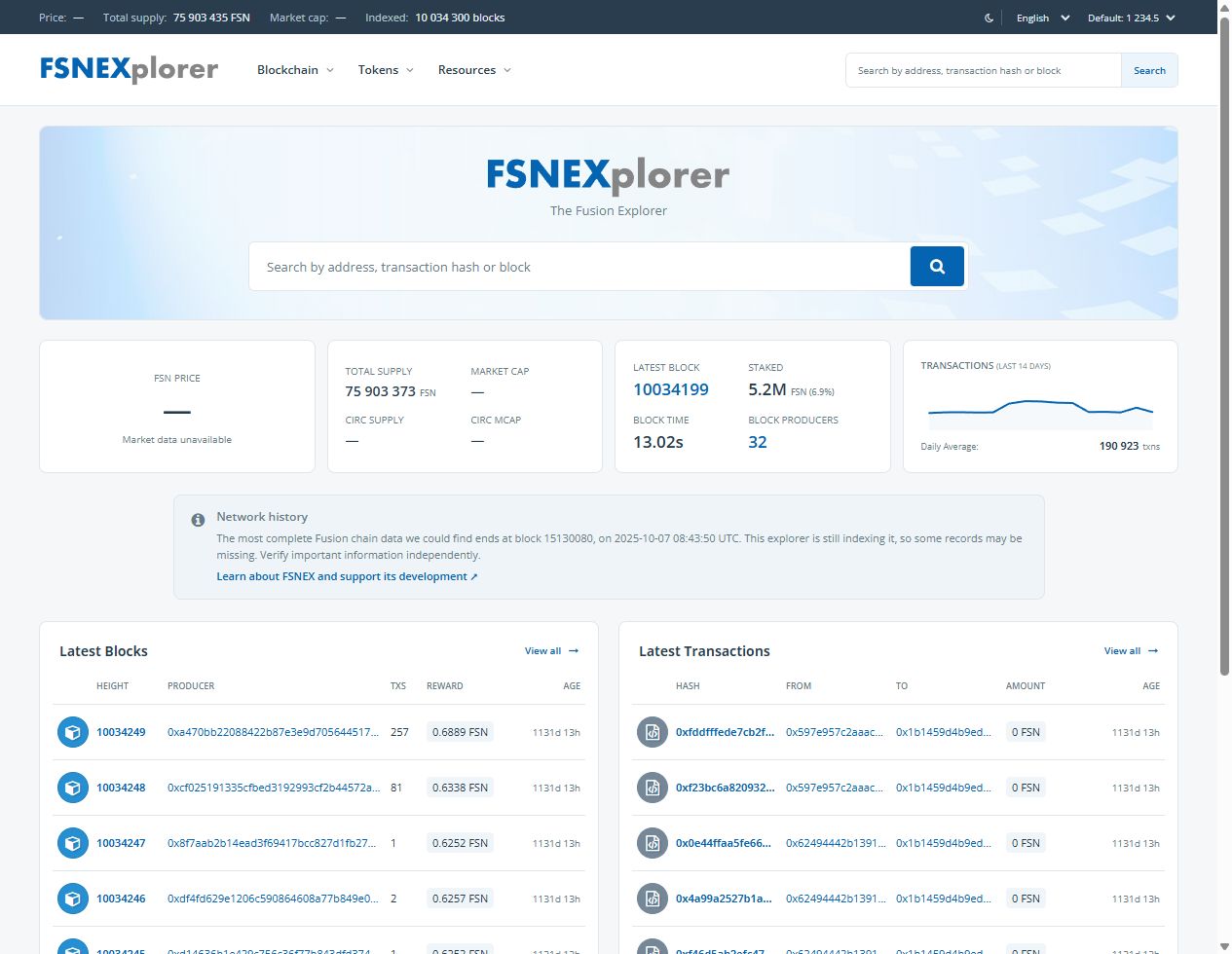
The original FSNEX, rebuilt to recover and explore Fusion's surviving chain data after its public infrastructure went offline.
Live network demonstration
A working deployment on BNB Smart Chain, demonstrating ongoing indexing and a rolling window of recent network activity.
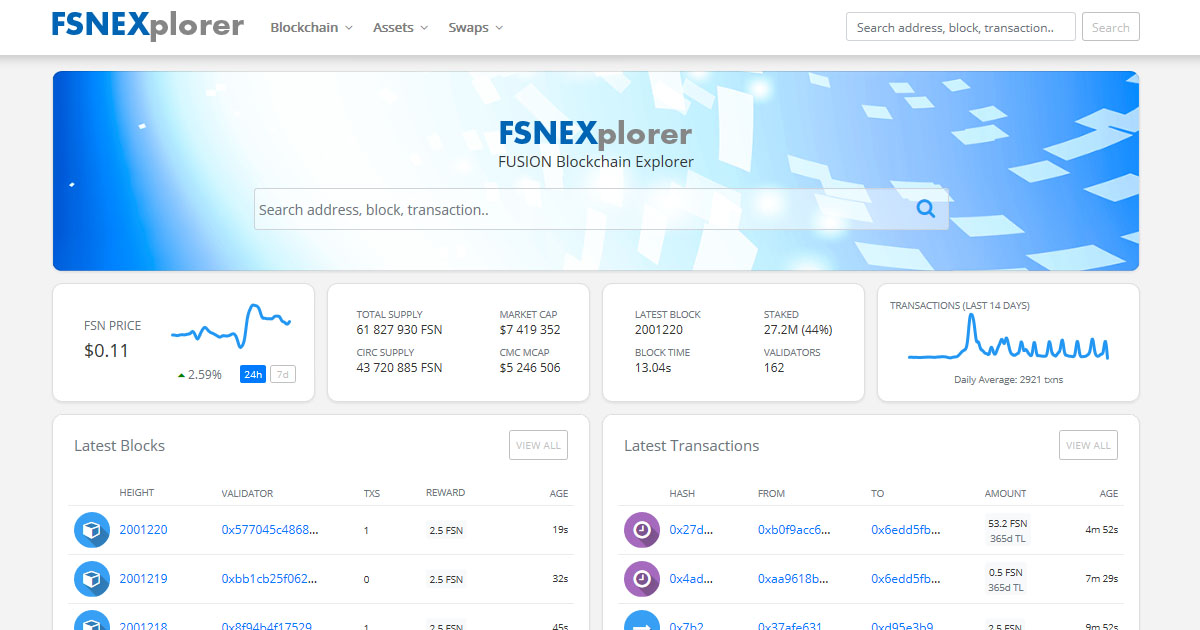
The original FSNEX. A practical explorer, built around its community.
Built from experience
FSNEX began as an explorer for the Fusion blockchain. When the chain's public infrastructure went away, the need to read its history remained.
Rebuilding FSNEX became an opportunity to make the explorer adaptable to other EVM networks, from active public chains to private deployments and historical archives.
ChainGaze is the next step in that work.
A few practical questions
Every network has its own details.
Here is where we start.
ChainGaze is built for EVM-compatible networks. Fusion and BNB Smart Chain are the current examples. We'll review your RPC interface, network rules and any custom transaction or token types before agreeing on a deployment.
Yes. The explorer supports a chain-specific identity, including its name and colour palette. Hosting, access requirements and operational responsibilities are scoped with you, particularly for private networks.
It starts with an available data source: a surviving node, a usable backup or recoverable chain data. We assess what can be recovered and make coverage limits clear. An explorer cannot recreate records that no longer exist.
Pricing depends on chain size, activity, retained history, customisation and hosting or support needs. Start with a short description of your network and we'll work out an appropriate scope.
Your network, next
Launching a network, replacing an explorer, or preserving a piece of blockchain history? Tell us what you have in mind.
A chain name, its current status and what you need
is enough to start the conversation.